Ha Noi, May 21, 2026 – Wildlife Conservation Society, Viet Nam Program (WCS Viet Nam), organized a workshop “Enhancing the effectiveness of management of the production and circulation of health supplements and pharmaceuticals containing wildlife-derived ingredients”.
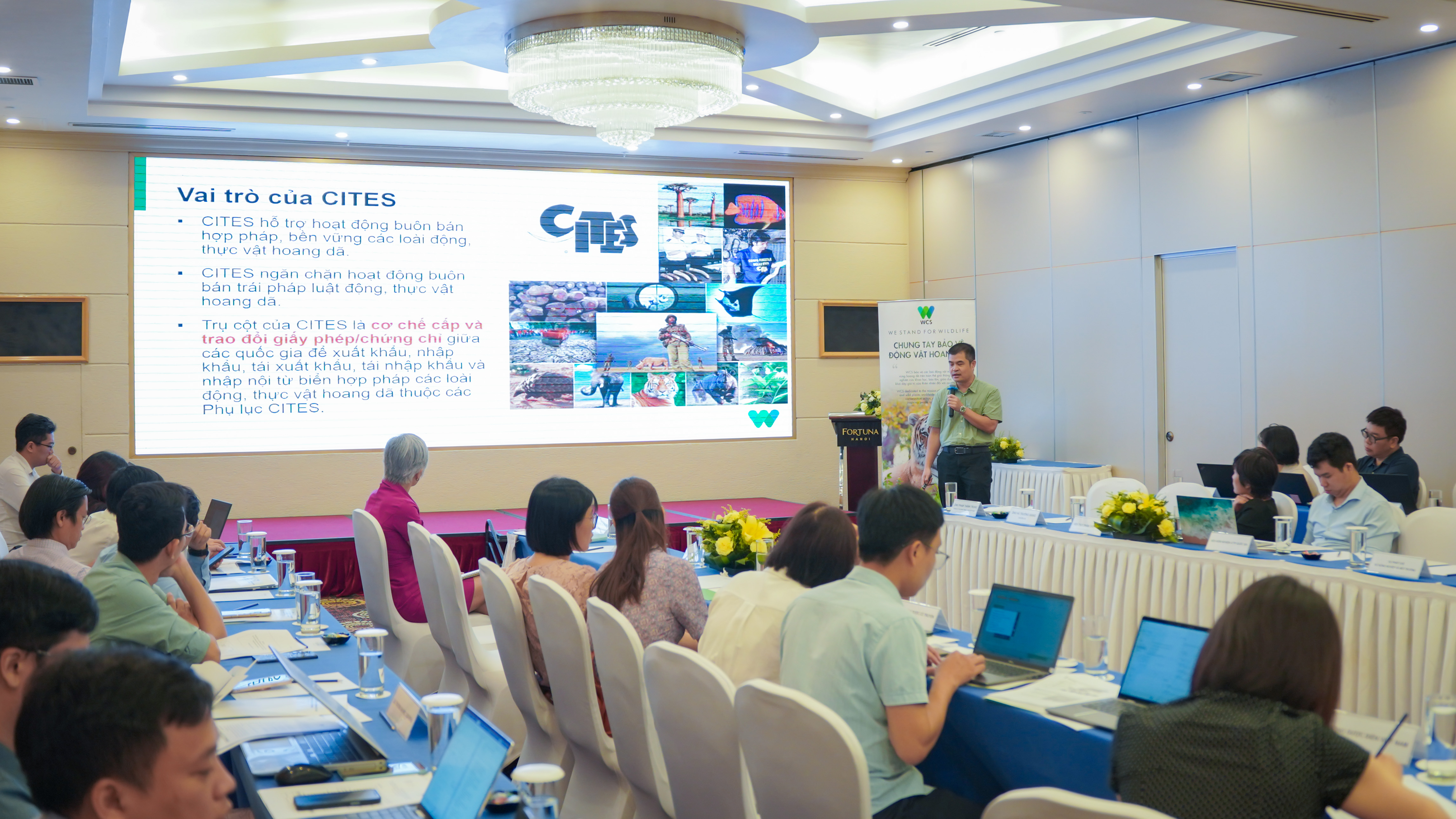
WCS Viet Nam shared on International and national legal framework on wildlife protection, Ha Noi, May 2026
The workshop was attended by more than 40 participants, including representatives from the Ministry of Health, the Ministry of Agriculture and Environment, the Ministry of Finance, and the Ministry of Industry and Trade, the CITES Viet Nam and CITES Scientific Authorities and government agencies responsible for food safety and market management in Hai Phong City and Bac Ninh Province as well as training and research institutions, non-governmental organizations (NGOs) working on traditional medicines and wildlife conservation, together with several businesses engaged in the production and trading of health supplements and pharmaceutical products.
In the opening remarks, Ms. Hoang Bich Thuy, Country director of WCS Viet Nam emphasized that the production, circulation, and promotion of health supplements and pharmaceutical products containing wildlife-derived ingredients, particularly from endangered and rare species such as pangolins, pose significant challenges to state management and law enforcement efforts related to wildlife protection. In the context of rapid growth of e-commerce and online advertising, strengthening inter-agency coordination, improving regulatory mechanisms, and enhancing the effectiveness of monitoring supply chains, circulation, and consumption of these products are of particular importance to wildlife conservation efforts.
During the workshop, participants were updated on the situation of wildlife-related crimes and violations in Viet Nam, as well as the supply of health supplements and pharmaceuticals containing wildlife-derived ingredients, including products containing pangolin scales (“Xuyen Son Giap”). According to open-source data from 2021 to 2025, WCS Viet Nam recorded 235 pangolin-related violations out of a total of 1,362 wildlife cases, accounting for approximately 17% of all recorded cases – with a confiscation of 430 pangolins and more than 20 tons of pangolin scales, mainly from African pangolin species.
Experts also explained that “Xuyen Son Giap” is the traditional medicine term for dried pangolin scales, which has appeared in traditional medicine texts for centuries. A 2025 survey conducted by WCS Việt Nam across e-commerce platforms identified 16 products whose labels or packaging indicated the presence of “Xuyen Son Giap” as an ingredient. These products were advertised for multiple health benefits, including women’s health care, body nourishment, detoxification and heat relief, treatment of skin conditions, enhancement of vitality, and improvement of respiratory conditions.
At the workshop, WCS Viet Nam and experts also shared findings from a review of international and Vietnamese legal frameworks on wildlife protection, as well as the management, production, and circulation of health supplement and pharmaceutical products containing wildlife-derived ingredients. Preliminary findings indicate that gaps and inconsistencies remain between pharmaceutical and food safety regulations and the laws governing wildlife conservation and the implementation of the Convention on International Trade in Endangered Species of Wild Fauna and Flora (CITES); particularly those related to traceability. Experts also highlighted the risk that wildlife-derived products may be easily legitimized under the labels of “medicinal ingredients” or “natural extracts,” particularly in the context of the rapid growth of online advertising and e-commerce activities.
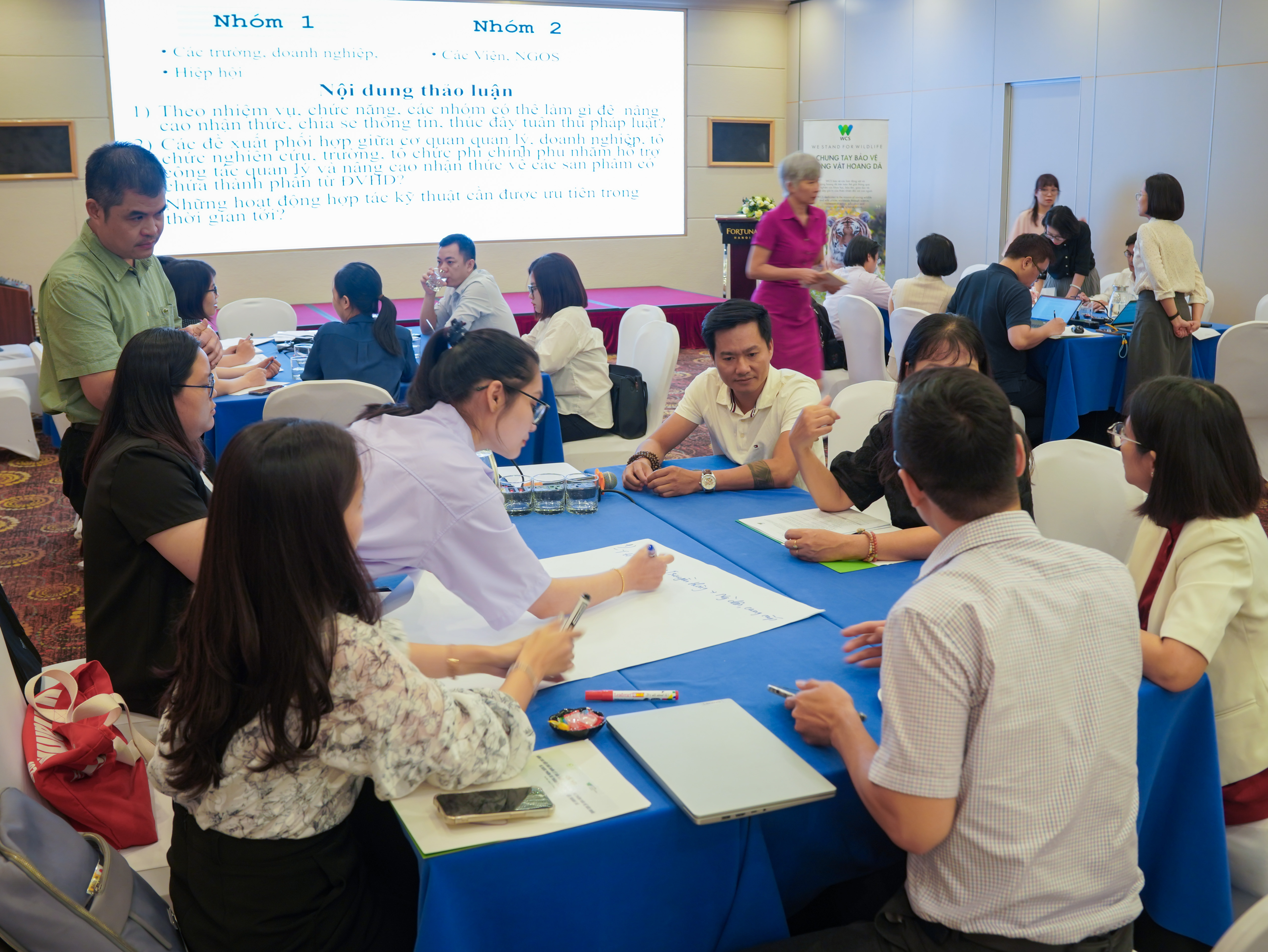
Group discussion, Ha Noi, May 2026
During the discussions, participants focused on proposing inter-agency coordination measures and priority actions to strengthen the control of the use of medicinal materials derived from wildlife, particularly those from endangered and rare species; improve the consistency of legal frameworks and professional guidelines in the areas of pharmaceutical management, food safety, and wildlife conservation; and promote research and dissemination of alternative medicinal ingredients, alongside measures aimed at reducing community demand for products containing wildlife-derived ingredients.
The workshop was conducted within the framework of the project “Reducing the trafficking of pangolins in Asia” funded by “Pangolin Crisis Fund”, an initiative by the Wildlife Conservation Network and Save Pangolins, implemented by WCS Viet Nam.