WCS Viet Nam conducts and supports research activities to generate scientific and practical evidence for preventing and combating illegal wildlife trade (IWT), as well as supporting policy development and implementation. Research is undertaken using a range of methods and data sources, combining field research, data analysis, policy and legal research, behavioral research, and the application of technology and advanced analytical approaches.
In the field of preventing and combating IWT, WCS Viet Nam researches trends, modus operandi, networks, and drivers of wildlife trafficking, while also analyzing risks and links between wildlife crime and other areas, including finance, technology, and organized crime. Research and data analysis also focus on identifying wildlife trafficking routes, methods, and networks, including activities conducted online and cases involving transnational elements.
In addition to research on wildlife crime, WCS Viet Nam conducts research on species and habitat conservation, wildlife health, and the risk of disease transmission among people, domestic animals, and wildlife. These activities contribute to improving understanding of the status of and threats to priority species, assessing risks, building the scientific evidence base for conservation measures, and supporting the development of solutions based on a One Health approach.
WCS Viet Nam also promotes applied research, integrating data and evidence from multiple sources to support government agencies, law enforcement and judicial authorities, and relevant partners in policy development, solution design, and the implementation of conservation activities. Research findings are shared with stakeholders through reports, technical materials, consultations, training activities, and appropriate communication products.
Through WCS’s global network of operations, research in Viet Nam is connected with data, scientific expertise, and experience from countries and regions around the world. This connectivity and integration of information contribute to strengthening the identification of cross-border trends and risks, enhancing information sharing, and providing an evidence base for conservation and IWT prevention and enforcement solutions.
Key achievements :
- Strengthened the early detection of transnational illegal wildlife trafficking networks through the sharing of information and analytical findings with law enforcement and judicial authorities.
- Supported the promotion of interagency coordination mechanisms in the investigation, prosecution, and adjudication of wildlife-related cases involving financial elements, contributing to more effective handling of complex cases.
- Participated in the Environmental Crime Money Laundering Risk Assessment Working Group for the 2023–2027 National Risk Assessment on Money Laundering and Terrorist Financing led by the State Bank of Vietnam.
- Conducted research and surveys on the involvement of local communities in illegal wildlife exploitation in Malaysia and Thailand, providing practical evidence to support the development of comprehensive prevention measures. (2025)
- Enhanced information sharing and bilateral cooperation in handling wildlife-related cases involving Vietnamese nationals overseas, thereby supporting investigations into organized and transboundary criminal activities.
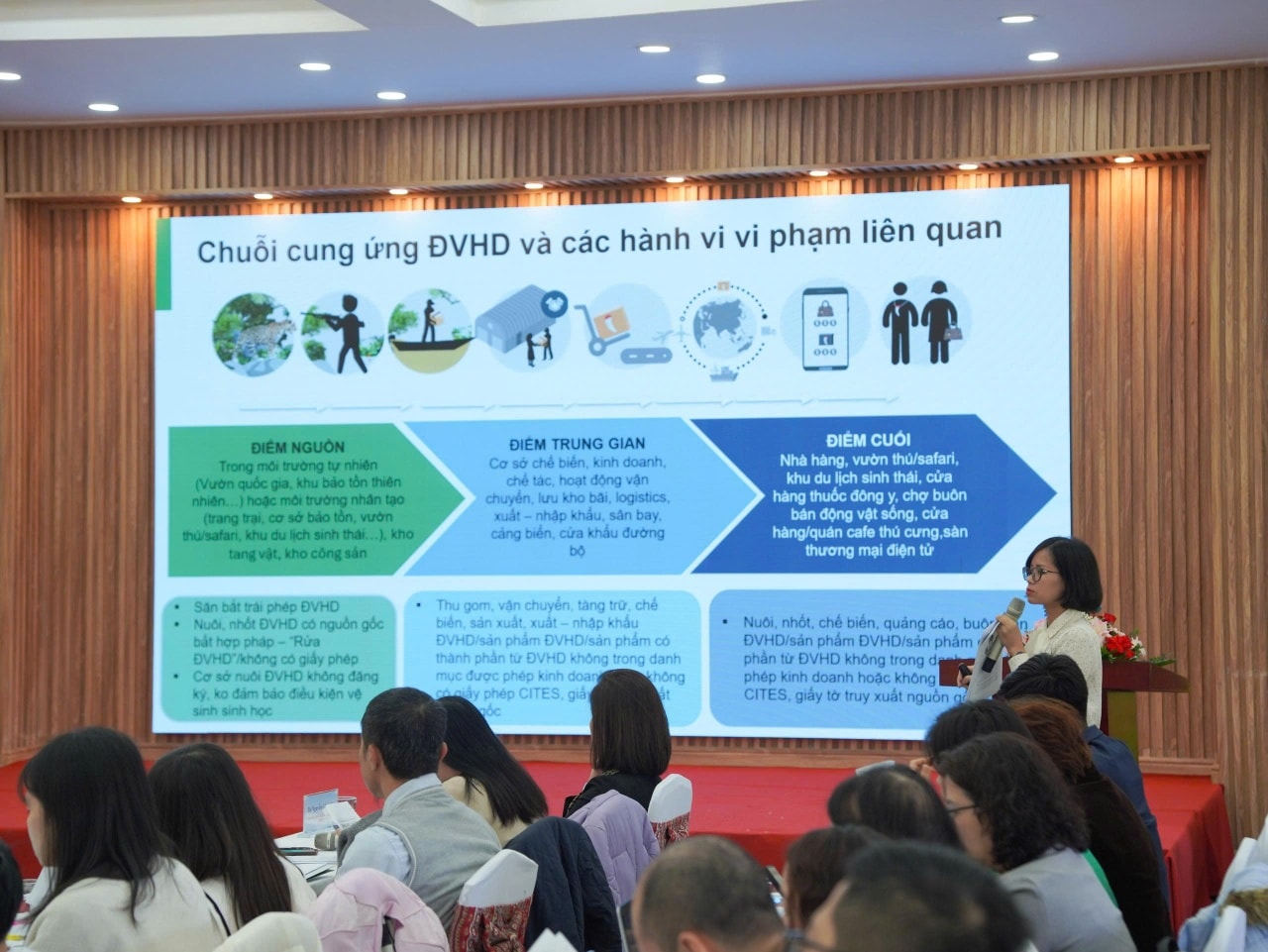
Consultation workshop: “Integrating ESG risks related to illegal wildlife trade into the risk management and financial crime prevention frameworks of credit institutions in Vietnam”, Ninh Binh, December 2025
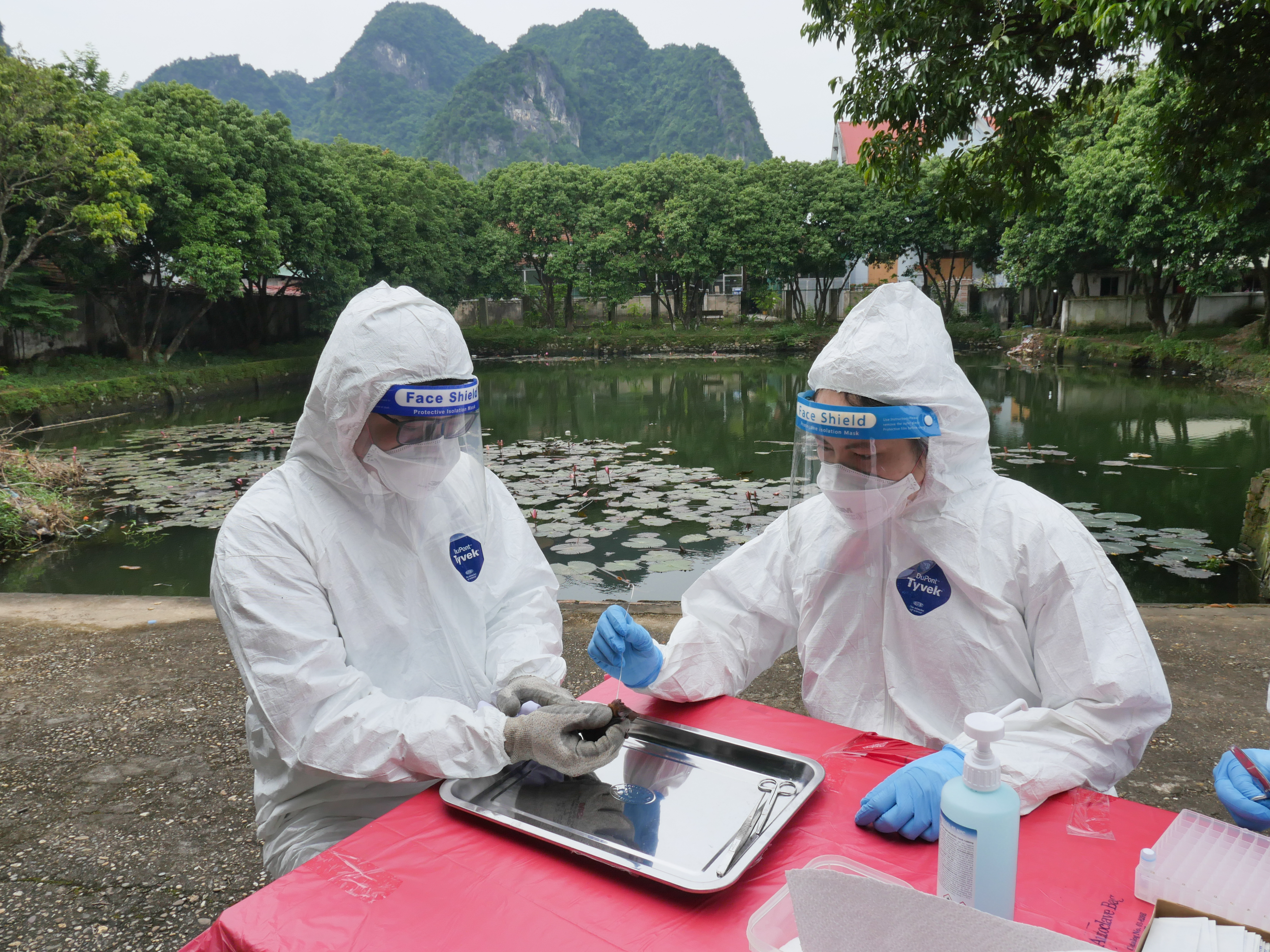
WCS Viet Nam staff conducting SARS-CoV-2 surveillance sampling in bats, Nghe An, September 2023
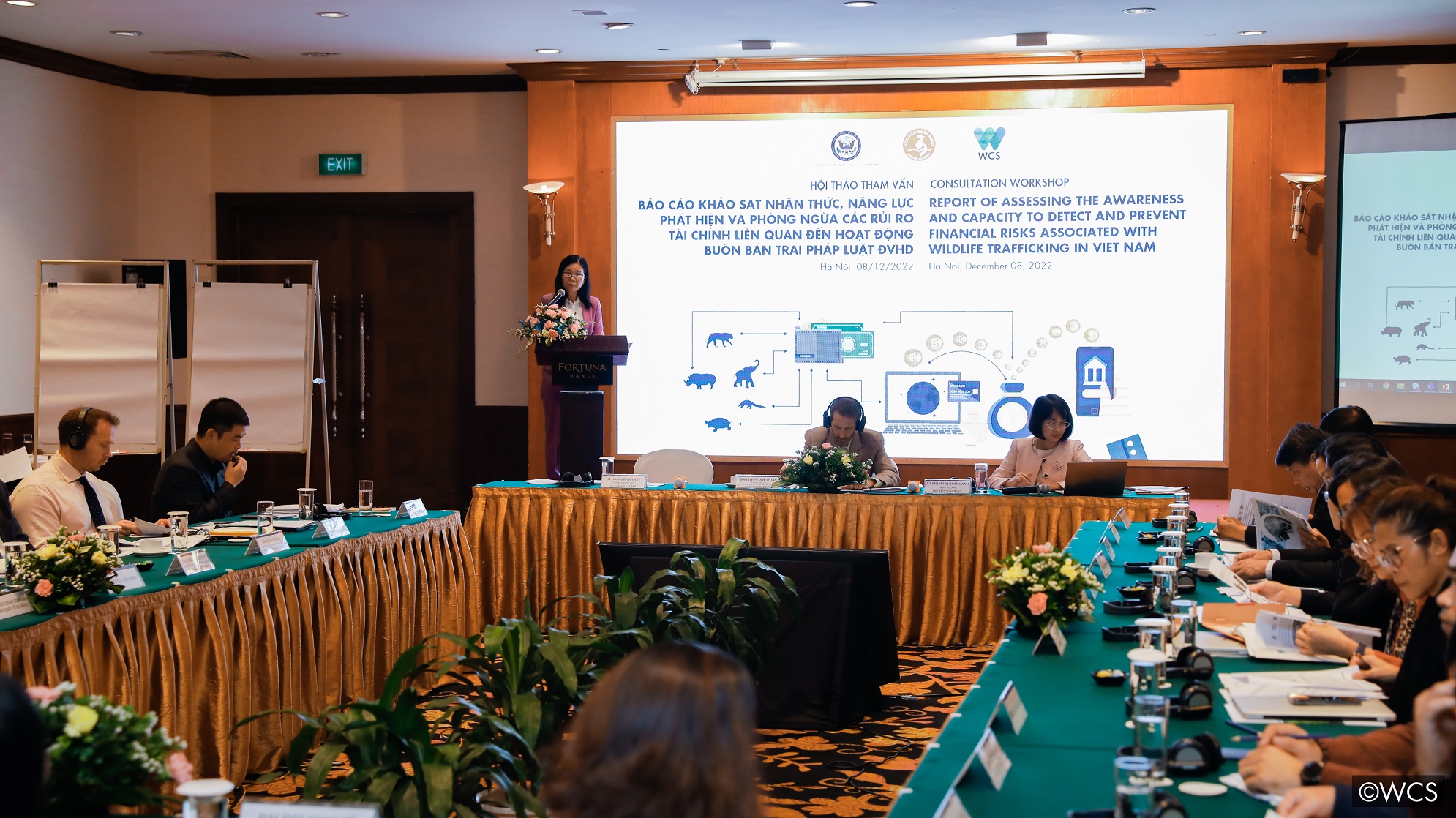
Consultation workshop on the survey report on awareness and capacity to detect and prevent financial risks associated with illegal wildlife trade, December 2022