The Ministry of Environment, Climate Change, Disaster Management and Meteorology (MECDM) and the Ministry of Fisheries and Marine Resources (MFMR) in partnership with Wildlife Conservation Society (WCS) has successfully led and convened a National Action Plan (NAP) for Coral Reefs Management and Conservation Provincial Validation Workshop in Auki, Malaita Province.
The event brought together representatives from the Malaita Provincial Government, community leaders, and key provincial stakeholders to validate the draft NAP which had earlier been presented to the National Hub members.
This workshop provided an inclusive and participatory platform for stakeholders to discuss, share feedback, and refine the NAP, ensuring it reflects the priorities and aspirations at the community and provincial level.
Alick Maeorea, Chief Fisheries Officer for Malaita Province expressed his appreciation for the workshop where he shared “this workshop provides us the opportunity to ensure that national policies truly reflect the realities, priorities, and the voices of our communities here in Malaita”.
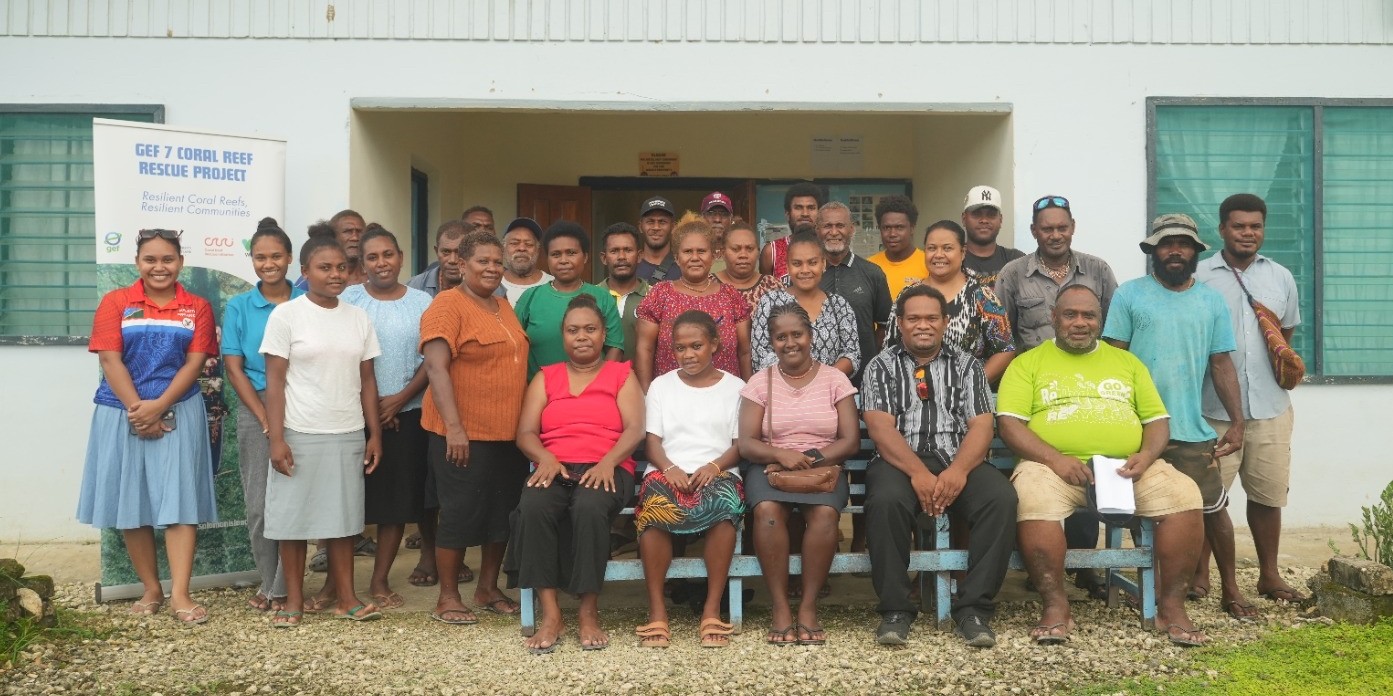
Participants engaged in the National Action Plan Validation Workshop Auki, Malaita Province.
The development of the NAP by the Telios Consultancy has been informed by extensive consultations across communities and provincial governments in Central, Isabel, Malaita, and Temotu Provinces. These were complemented by engagements with national government agencies, non-governmental organizations, private sector representatives, and academic and research institutions. This broad consultation process ensures strong integration of community perspectives, policy priorities, and scientific knowledge.
The Deputy Director for Environment and Conservation Division, Trevor Maeda highlighted the importance of inclusivity in the process, noting that “we want to see a NAP that is appropriate at national, provincial, and community levels.” This underscores the commitment to aligning governance and action across all levels.
Participants expressed support for the NAP and emphasized the importance of continued collaboration, as well as strengthening and empowering existing community and provincial systems to support effective implementation. Martin Jasper Principal Fisheries Officer for Malaita Province highlighted that “this document will serve as a stepping stone for us to become better stewards of the resources we have in our care”.
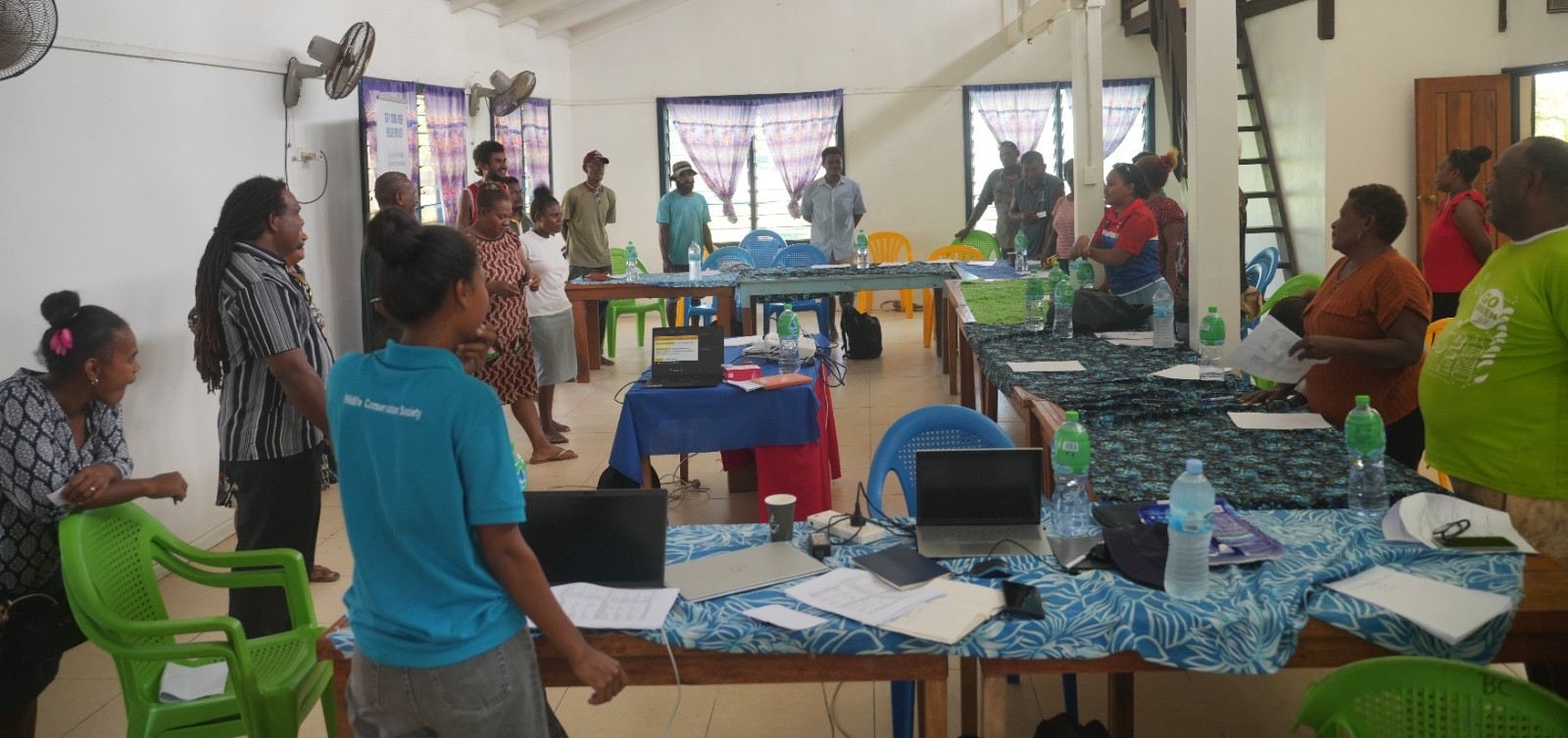
Group activity before NAP closing session.
The workshop concluded with shared key messages tailored to capture different audiences reinforcing the collective responsibility to manage, protect and restore coral reefs. One participant captured the spirit of the discussion stating, “let us look after our coral reefs like how we would look after our children, so it will provide for our children, grandchildren, and future generations”. The community leader for Oibola Benjamin Waleilia concluded by expressing his gratitude to be part of the validation process and the community’s receptiveness to conservation and livelihood initiatives, adding “at the end of the day healthy corals makes healthy livelihoods”.
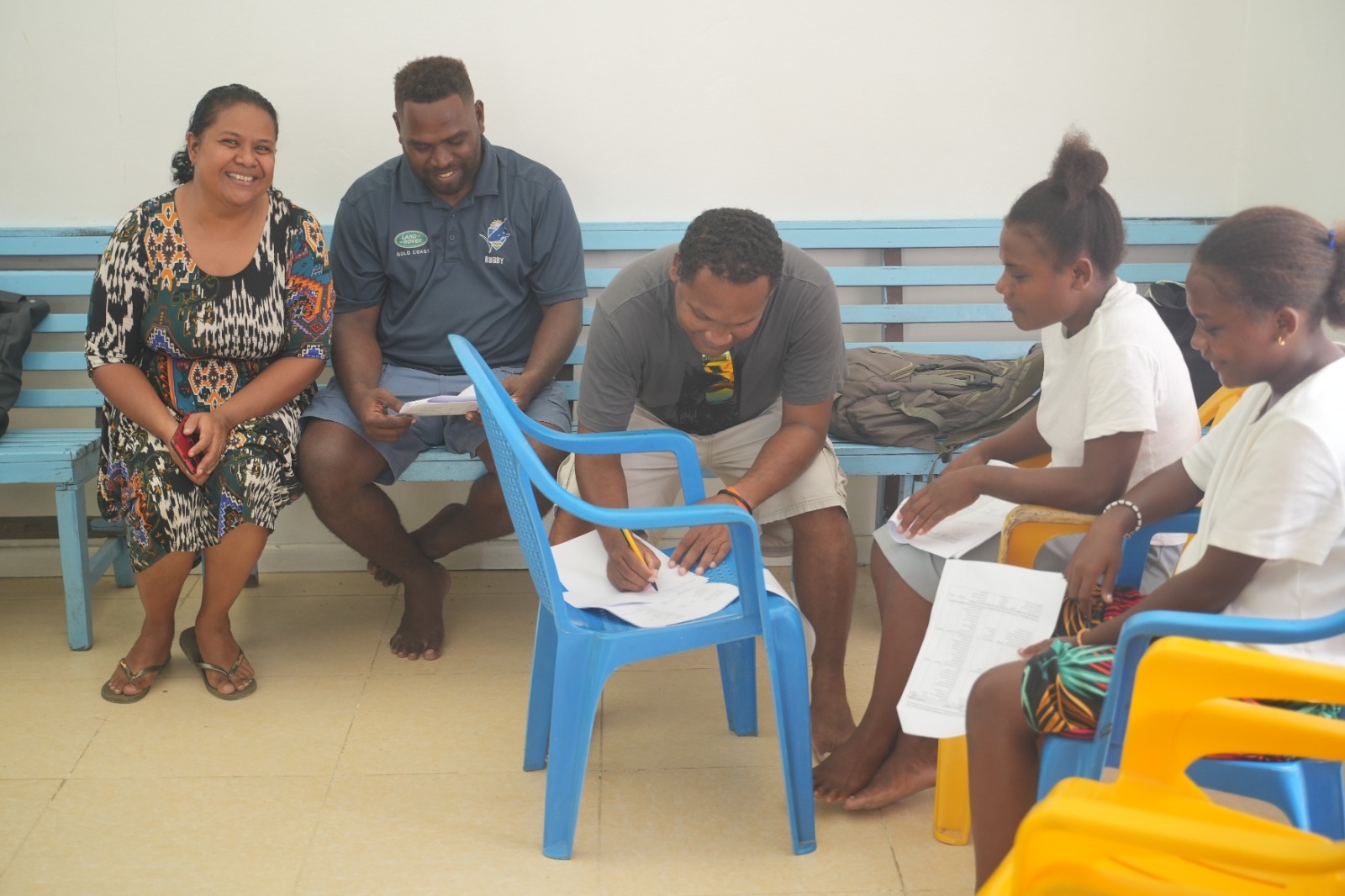
Mixed focus group discussions to review the nine thematic goals for NAP.
The WCS, MECDM, and MFMR expressed their appreciation for the opportunity to strengthen community and provincial representation in the NAP process. By capturing voices across all levels, the plan is positioned to be both practical and locally relevant to support the long-term survival of climate resilient coral reefs ecosystems, conserving biodiversity and sustaining the blue economy and livelihoods that depend on them.
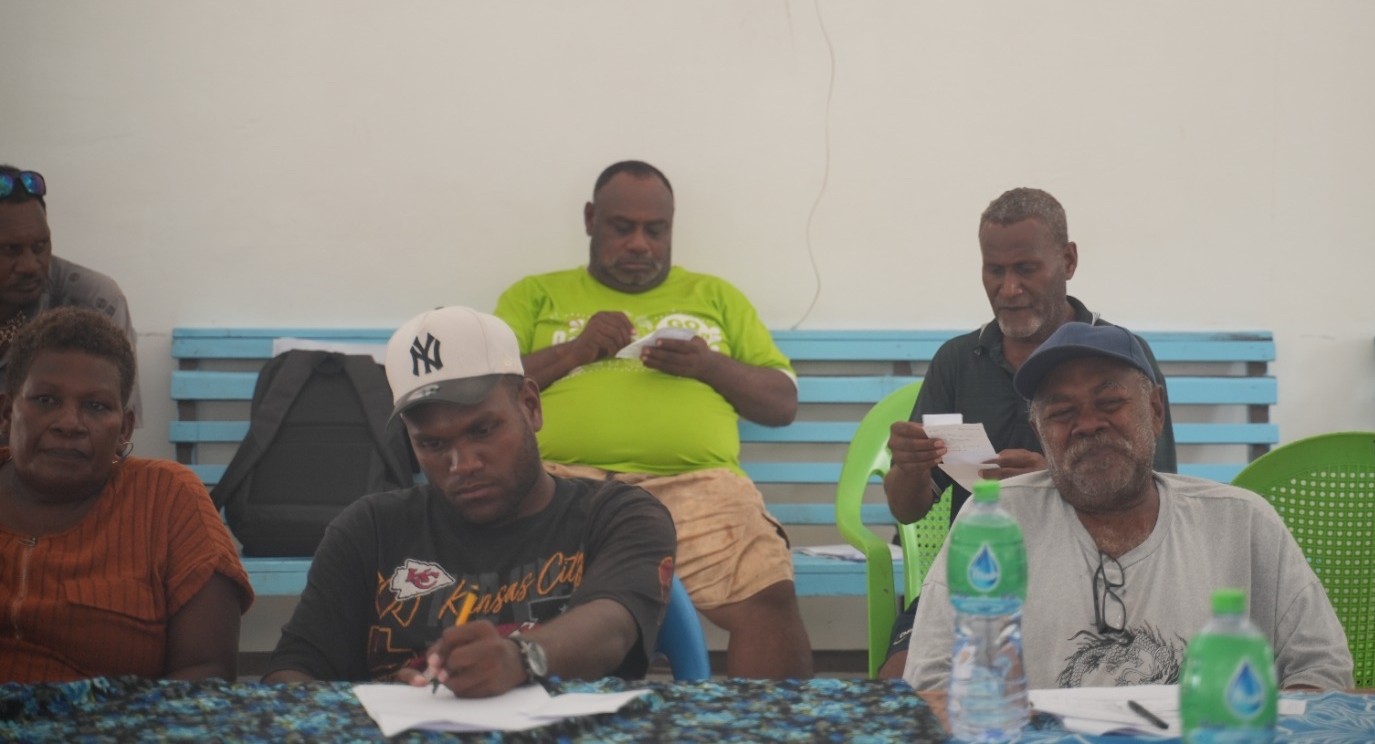
Participants actively engaging in drafting key messages for various audience around coral reef conservation.
The Coral Reef Rescue (CRR) Project, funded by the Global Environment Facility (GEF 7) is a government driven initiative through the Ministry of Environment Climate Change and Disaster Management and Meteorology (MECDM) and the Ministry of Fisheries and Marine Resources (MFMR). Implementing partners include the Wildlife Fund for Nature (WWF-US), with the University of Queensland (UQ) as the Lead Executing Agency, and the Wildlife Conservation Society (WCS) as the NTF in Solomon Islands (in-country lead).